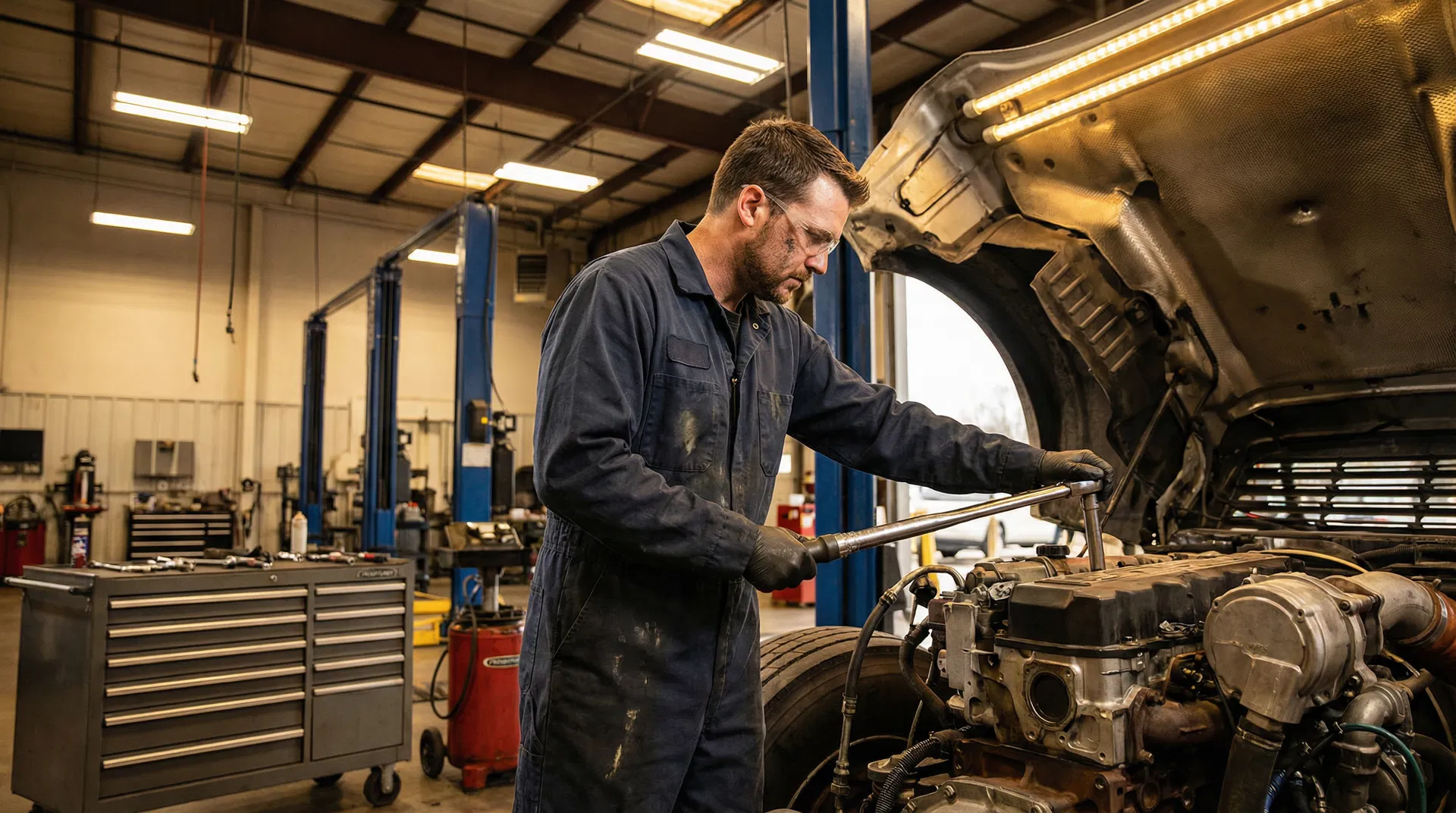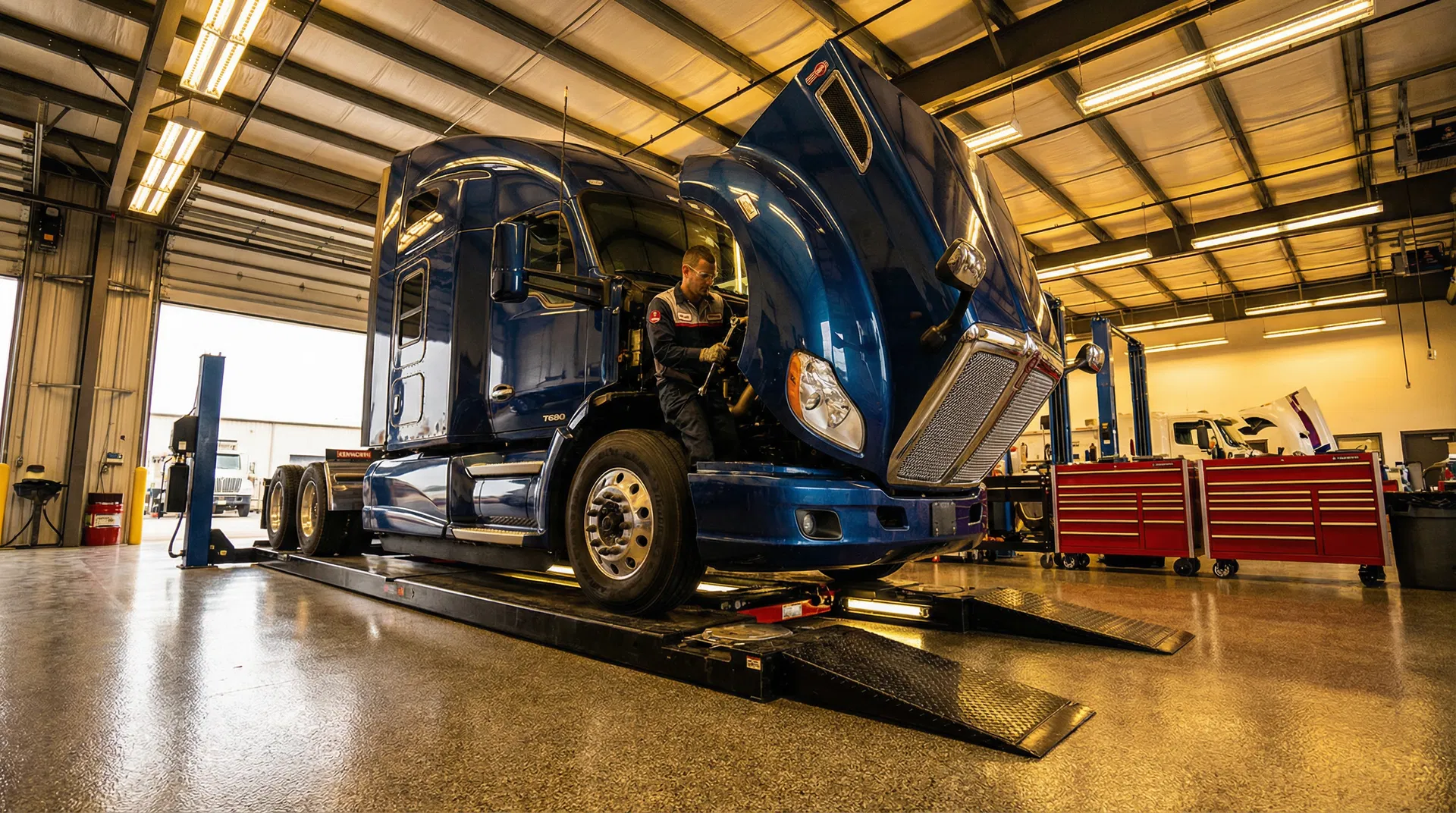
Every commercial motor vehicle over 10,001 pounds must pass an annual DOT inspection. At CTR, our certified inspectors have performed thousands of 37-point FMCSA-compliant inspections over 30 years — keeping fleets and owner-operators compliant across the Charlotte metro and I-85 corridor.
Downtime is lost revenue. That is the fundamental reality of the trucking business, and it is the single most important reason CTR has built its reputation on fast, thorough, and reliable DOT inspection services for over 30 years.

CTR is not a general automotive shop that happens to inspect trucks on the side. Heavy-duty commercial vehicles have been our core business since 1995. Our inspectors have decades of hands-on experience with every class of commercial motor vehicle, every major engine platform, and every common deficiency pattern that leads to out-of-service orders.
Every repair performed at CTR — whether it is a brake adjustment, a lighting fix, or a complete suspension overhaul needed to pass inspection — is backed by our industry-leading 3-year, 36,000-mile warranty. If a repair we performed fails within warranty, we make it right at no additional cost.
If your truck or trailer needs work to pass, you do not have to tow it to a separate repair shop or make multiple trips. CTR is a full-service heavy-duty repair facility. Our technicians handle the repairs on-site and our inspector reinspects the vehicle immediately — often completing the entire process in a single business day.
You will never receive a surprise invoice from CTR. We provide clear, detailed estimates before starting any repair work. The inspection fee is straightforward, and any additional repair costs are communicated and approved before we turn a wrench.
We work with fleet managers to schedule inspections during planned maintenance windows, provide organized documentation for compliance files and audits, and help you maintain clean CSA scores across your entire fleet. Whether you operate 3 trucks or 300, we build an inspection program around your operational needs.
Our shop at 2931 Armentrout Drive sits right off I-85 at Exit 58, making us accessible from every major Charlotte-area highway. We serve Concord, Charlotte, Kannapolis, Harrisburg, Salisbury, China Grove, Mooresville, Huntersville, Gastonia, Statesville, and all surrounding communities.
Our annual DOT inspection follows the FMCSA Appendix G checklist to the letter — the same comprehensive criteria used in a Level 1 North American Standard roadside inspection.


Air brakes, hydraulic brakes, and parking brake systems are the single most cited violation category in DOT roadside inspections nationwide — approximately 43% of all out-of-service orders.
Brake drums and rotors for scoring, heat checks, and minimum thickness. Brake pads and shoes for remaining lining material. Slack adjusters for proper adjustment and free stroke measurement. Pushrod travel measurements compared against FMCSA maximum stroke limits. Air compressor output and governor cut-in/cut-out pressures. Air tanks, air lines, and fittings for leaks and damage. Low-pressure warning devices and automatic drain valves. Spring brake operation and parking brake holding capacity. Brake hose routing for chafing, kinks, and heat exposure.
Complete steering and suspension system examination covering all load-bearing and directional components.
Steering wheel, column, gear box, pitman arm, drag link, tie rod ends, and all associated hardware for wear, looseness, and damage. Leaf springs for cracks and missing leaves. Air ride bags for leaks and proper inflation. Shock absorbers, U-bolts, spring hangers, equalizer beams, torque rods, bushings, and all mounting hardware. King pin wear measured against maximum allowable movement specifications.
Every tire on every axle — including all trailer tires — is inspected per FMCSA tread depth requirements.
Tread depth (minimum 4/32" on steer tires, 2/32" on all other positions per FMCSA requirements). Sidewall condition, proper inflation pressure, cuts, bulges, and exposed cord or belt material. Wheels and rims checked for cracks, elongated bolt holes, and proper lug nut torque. Hub seals inspected for leaks and bearing condition.
Lighting violations account for approximately 13% of out-of-service orders — among the easiest to prevent and most commonly cited.
Headlights, taillights, brake lights, turn signals, hazard flashers, clearance lights, side marker lights, identification lights, license plate lights, and all required reflectors tested for proper operation and compliance with FMCSA lighting standards. Wiring inspected for damage, improper splices, and inadequate protection.
Critical connection points between tractor and trailer units examined under actual operating conditions.
Fifth wheel assemblies inspected for cracks, proper mounting, locking mechanism operation, and wear on the pivot and bearing plate. Pintle hooks, drawbars, safety chains, and safety devices checked on combination vehicles. Glad hand connections and air line integrity between tractor and trailer verified for leaks and proper sealing.
Structural integrity assessment of the vehicle's primary load-bearing framework.
Frame rails and cross members inspected for cracks, breaks, sagging, and any modifications or repairs that compromise structural integrity. Cab mounts, body mounts, and all fastening hardware checked. Any rust-through that affects structural integrity is flagged.
Complete exhaust routing and integrity check from manifold to tailpipe.
Complete exhaust system inspected for leaks at manifold connections, pipe joints, and muffler seams. Routing verified to ensure proper clearance from fuel lines, air lines, wiring, and any combustible materials. Missing or damaged exhaust components noted.
Fuel containment and driver visibility — two critical safety systems in one final check.
Fuel tank mounting brackets and straps checked for security and condition. Fuel lines, fittings, and crossover lines inspected for leaks, chafing, and proper routing. Fuel caps verified for proper seal. Windshield inspected for cracks, chips, or discoloration in driver's direct line of sight. Wiper blades and arms checked for proper operation. Defroster operation verified.
If your vehicle passes all 37 inspection points, you receive a completed annual inspection report and CVSA decal. If we identify deficiencies, our on-site technicians can perform the necessary repairs immediately — allowing you to pass reinspection the same day.
Federal law requires every commercial motor vehicle meeting FMCSA weight or passenger thresholds to pass a DOT inspection at least once every 12 months. Here are situations where you should schedule sooner:
Your current inspection report or sticker has expired or is within 30 days of expiration.
Do not let it lapse — operating without a current annual inspection is itself a violation that will appear on your CSA record.
You recently purchased a used truck or trailer that lacks current inspection documentation.
Verify compliance before putting any newly acquired vehicle into revenue service.
A roadside inspection resulted in an out-of-service order.
After completing the required repairs, you need a qualified inspector to verify the corrections and clear the vehicle for operation.
Your CVSA decal is missing, damaged, or illegible.
While the decal itself is not proof of annual inspection compliance, a missing decal increases your likelihood of being selected for a full roadside inspection.
You are adding a vehicle to your fleet and need it fully compliant before putting it into revenue service.
Every vehicle must have current documentation before operating commercially.
Your CSA scores are trending upward and you want to proactively identify and correct maintenance issues.
Fix problems in the shop before a DOT officer finds them during an enforcement stop.
You have been notified of an upcoming FMCSA compliance review or audit.
Ensure every vehicle in your fleet has current documentation before auditors arrive.

Call 704-786-0132 to book your inspection. We accommodate walk-ins when bay space allows, but scheduling in advance guarantees minimal wait time and ensures we have a certified inspector available for your vehicle type. Fleet managers can schedule multiple vehicles in a single visit or across planned maintenance windows.
Our facility at 2931 Armentrout Drive, Concord, NC 28025 is directly accessible from I-85 at Exit 58. We have dedicated heavy-duty bays with drive-through capability for tractor-trailer combinations. Please bring your current registration, previous inspection reports if available, and any known maintenance records.
Our certified inspector performs a complete Appendix G inspection covering every system detailed above. Inspection duration is typically 45 to 90 minutes depending on vehicle type, configuration, and condition. Tractor-trailer combinations require inspection of both units and take longer than single vehicles.
If your vehicle passes, you receive your completed inspection report with inspector certification, your inspection decal, and you are on your way. If repairs are needed, our inspector provides a detailed deficiency list and our service writers prepare a clear repair estimate. Our technicians can often complete the necessary repairs the same day.
We maintain all inspection records on file for the federally required 14-month retention period. Fleet customers can request copies of inspection reports at any time for their compliance files, audit preparation, or insurance documentation. Digital copies are available upon request.
The Federal Motor Carrier Safety Administration (FMCSA) establishes the rules governing commercial motor vehicle inspections under Title 49 of the Code of Federal Regulations. Understanding these requirements is essential for every motor carrier and owner-operator.


FMCSA annual inspection requirements apply to every motor carrier operating CMVs in interstate or intrastate commerce with GVWR of 10,001+ lbs, vehicles transporting 8+ passengers for compensation, 15+ passengers not for compensation, or vehicles carrying placarded hazardous materials.
Every qualifying CMV must receive a complete annual inspection at least once every 12 months by a qualified inspector meeting 49 CFR 396.19 criteria. Many carriers choose to inspect every 6 months or quarterly as part of a proactive compliance strategy.
Motor carriers must retain inspection reports for a minimum of 14 months. The report must identify the inspector, date, vehicle, and results. A copy must be on the vehicle or available for review by authorized officials at all times.
Operating without a current annual inspection can result in fines of $1,000–$10,000 per violation, out-of-service orders, CSA points, and potential triggers for FMCSA compliance reviews or operating authority revocation.
The CVSA defines six levels of DOT inspection. Understanding these levels helps fleet managers know what to expect during roadside enforcement.
The most comprehensive roadside inspection. A 37-step examination covering both the driver (credentials, medical certificate, hours of service, hazmat endorsements if applicable) and the vehicle (complete mechanical inspection including under-vehicle components requiring the inspector to physically get beneath the truck). This is the gold standard — and it is the same scope as the annual inspection we perform at CTR.
Same driver checks as Level 1. Vehicle inspection covers all items visible during a walk-around without getting under the vehicle. Does not include under-chassis brake measurements, frame inspection from below, or suspension component examination.
Examines only the driver's credentials, documentation, hours-of-service compliance, seatbelt usage, and medical certificate. No vehicle examination.
A one-time examination of a specific item or system — typically performed to verify that a previously cited out-of-service condition has been corrected.
A complete vehicle inspection performed without the driver. Can occur at terminals, maintenance facilities, or anywhere the vehicle is parked. A passing Level 5 inspection can satisfy the annual inspection requirement.
A full Level 1 inspection with additional checks specific to highway route controlled quantities of radioactive materials, including shipping documentation, packaging integrity, and radiation monitoring.
The annual inspection performed at CTR covers all vehicle components included in a Level 1 inspection — meaning when your truck passes our inspection, it has been examined to the highest standard of commercial vehicle safety evaluation.
Understanding the most frequently cited violations helps fleet managers prioritize maintenance and pre-trip inspections.
Brakes out of adjustment (pushrod stroke exceeding FMCSA limits)
Brake linings/pads worn below minimum thickness
Air leaks in the brake system (lines, fittings, chambers)
Inoperative or defective automatic brake adjusters
Defective brake drums/rotors (cracked, scored beyond limits)
Inoperative parking brake system
Inoperable headlights, taillights, or brake lights
Non-functional turn signals
Missing or inoperable clearance and marker lights
Missing required reflectors or retroreflective sheeting
Tread depth below minimum (4/32" steer, 2/32" other)
Flat tire or audible air leak
Tire sidewall damage — cuts, bulges, exposed cord
Tires with tread or sidewall separation

Our annual inspection process specifically targets these high-frequency violation areas. When we identify a brake out of adjustment, a burned-out clearance light, or a tire approaching minimum tread depth, we flag it immediately — and our technicians can make the correction on the spot.
Every violation found during a DOT roadside inspection is recorded in the Safety Measurement System (SMS) and affects your carrier's scores across seven BASICs.
Vehicle maintenance violations directly impact your Vehicle Maintenance BASIC, which is the category most directly affected by the condition of your equipment.
High CSA scores trigger FMCSA interventions: warning letters, targeted investigations, compliance reviews, and potential operational restrictions. Beyond regulatory consequences, shippers and brokers check carrier CSA scores before tendering loads, and insurance companies use CSA data to set premium rates.
A roadside inspection violation goes directly on your CSA record. A deficiency found during a scheduled annual inspection at CTR does not. When we catch a worn brake lining or a leaking air line during your annual inspection, we fix it before it becomes a roadside citation that damages your scores for 24 months.
Get the same tools our fleet customers use to stay compliant year-round.
Pre-Inspection Checklist (PDF)
Printable 37-point checklist drivers and fleet managers can use before bringing their truck in for annual inspection.
DOT Compliance Quick Reference Guide (PDF)
One-page reference covering inspection frequency, GVWR thresholds, documentation retention, violation penalties, and CSA score impact.
Fleet Inspection Planning Template
Spreadsheet for tracking inspection due dates, vehicle information, inspector details, deficiency notes, and compliance status.
Enter your info below and we'll send it to your inbox immediately.
CTR's DOT inspection facility at 2931 Armentrout Drive in Concord, NC is strategically located just off I-85 at Exit 58 — providing convenient access for commercial vehicles traveling the I-85 corridor.
Fill out the form below to request an appointment, or call us directly at (704) 786-0132. Walk-ins welcome when bay space allows.
Fill out the form below and our team will contact you within 24 hours to schedule your DOT inspection.
Call Cars, Trucks, & RVs at (704) 786-0132 to schedule your annual DOT inspection at our Concord, NC facility.
CTR Repair — Cars, Trucks & RVs Inc. | 2931 Armentrout Drive, Concord, NC 28025 | Monday–Friday, 7:00 AM – 5:00 PM