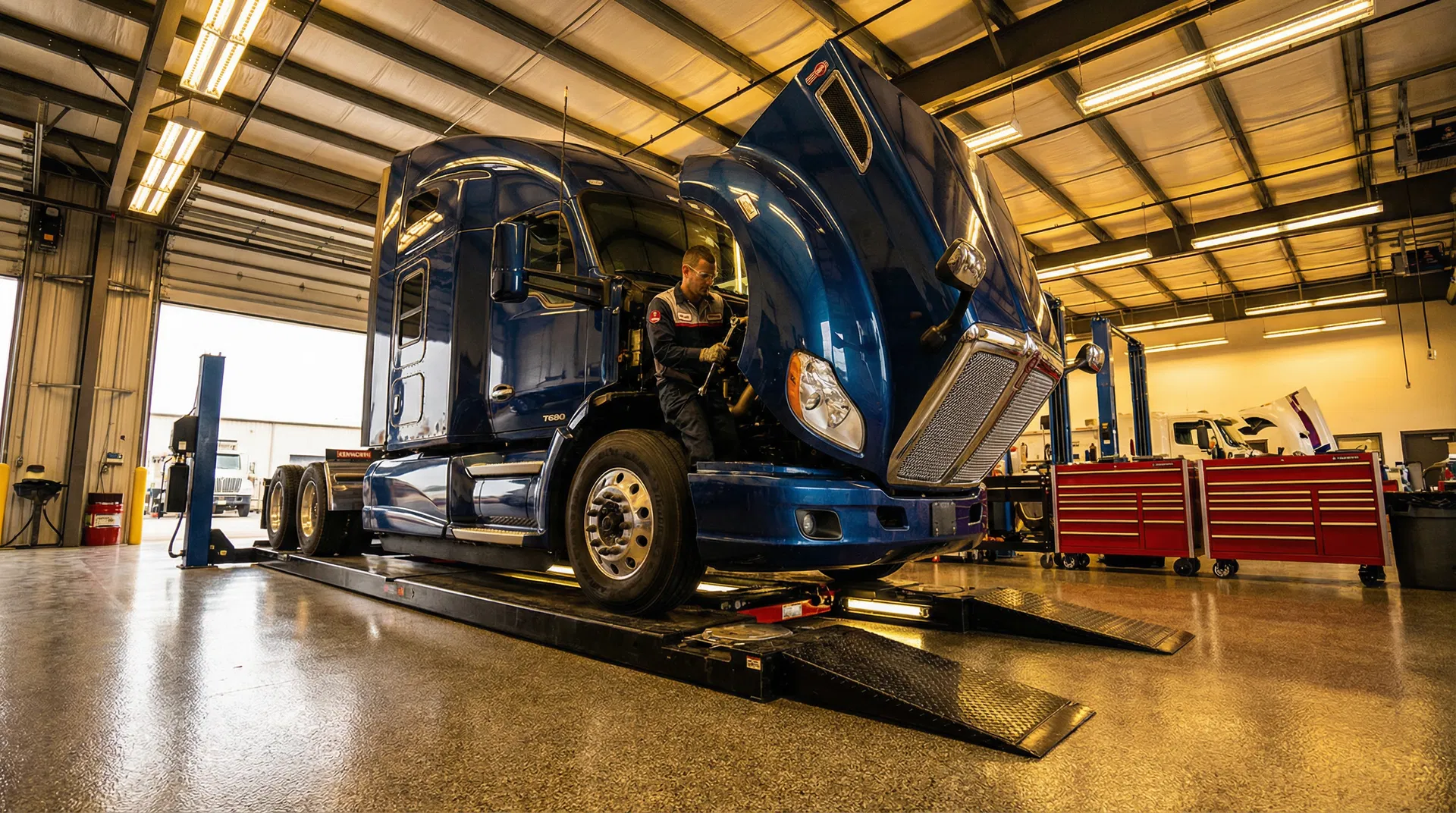
DOT Inspection & Compliance — Charlotte, NC Area
DOT compliance is not optional — it is the law, and the consequences of non-compliance are severe. CTR Heavy Duty is a FMCSA-certified inspection facility serving Charlotte-area fleets from our Concord, NC location, just 15 minutes from Uptown Charlotte via I-85. Annual DOT inspections, out-of-service repairs, fleet scheduling, and complete compliance documentation — all under one roof.
Why Choose CTR for DOT Inspections
A DOT inspection is more than a sticker — it is a comprehensive safety evaluation that protects your drivers, your fleet, and the public. CTR combines FMCSA-certified inspection expertise with a full-service repair facility, so if issues are found, they are fixed immediately. No second trip, no towing, no wasted time.
FMCSA-Certified Inspection Facility
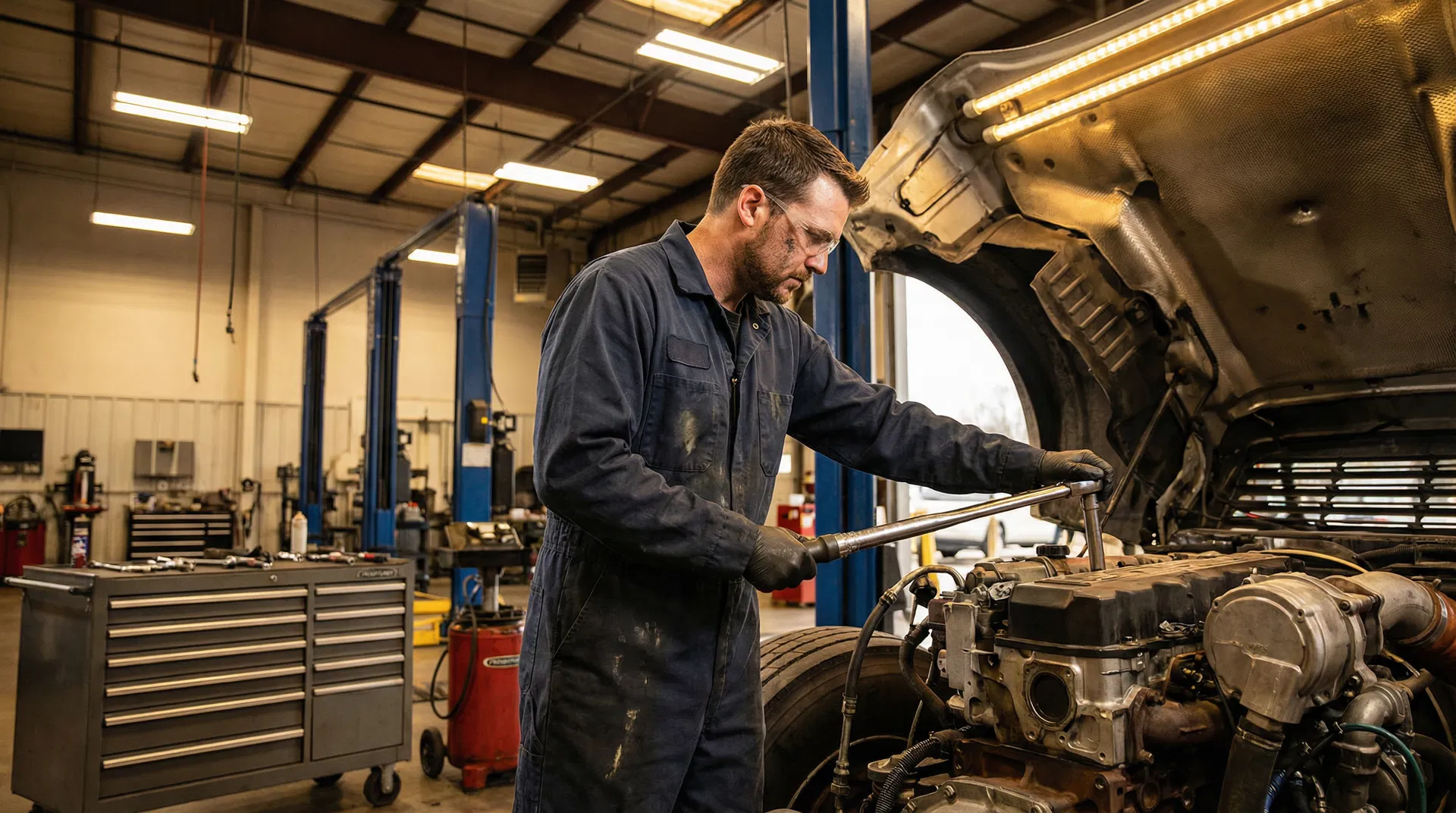
CTR is a registered FMCSA inspection facility authorized to perform annual DOT inspections on all Class 6-8 commercial motor vehicles. Our inspectors hold current CVSA (Commercial Vehicle Safety Alliance) certification and follow the exact inspection procedures mandated by federal regulations.
Same-Day Inspections — Most Vehicles
We understand that every hour a truck sits idle costs your fleet money. Most DOT annual inspections are completed the same day, often within 1-2 hours for vehicles in good condition. Schedule ahead for guaranteed same-day completion, or drive in during business hours.
On-Site Repairs If Issues Are Found
Unlike standalone inspection stations that can only identify problems, CTR is a full-service heavy-duty repair facility. If your vehicle fails any inspection item, our ASE-certified technicians can perform the repair immediately — no need to tow to a separate shop. One stop, one visit.
Complete Documentation & Records
Every inspection includes a detailed written report documenting the condition of all inspected components. We maintain digital records for fleet customers, making it easy to track inspection history, upcoming renewal dates, and repair documentation for FMCSA audits.
Fleet Scheduling & Volume Pricing
Fleet customers receive priority scheduling, volume pricing, and dedicated account management. We work with your dispatch team to schedule inspections during planned downtime, minimizing disruption to your operations. Consolidated billing and detailed reporting included.
30+ Years of DOT Compliance Experience
Since 1995, CTR has helped Charlotte-area fleets maintain DOT compliance. We know what inspectors look for, which violations result in out-of-service orders, and how to keep your fleet running legally and safely. Our experience helps you avoid costly roadside violations.
DOT Inspection Services
CTR performs comprehensive DOT inspections covering every FMCSA-required system. Our certified inspectors follow the exact procedures mandated by federal regulations, and our full-service repair facility can address any issues found during inspection.
Federal Motor Carrier Safety Administration (FMCSA) regulations require every commercial motor vehicle (CMV) operating in interstate commerce to pass an annual inspection conducted by a qualified inspector. This is the comprehensive Level I equivalent inspection that covers every major vehicle system. CTR performs these inspections daily for Charlotte-area fleets.
Complete brake system inspection — air brakes, hydraulic brakes, parking brake, brake adjustment, lining thickness, drum/rotor condition
Steering system — steering wheel play, tie rods, drag links, steering gear, power steering components
Suspension system — springs, U-bolts, hangers, air bags, shock absorbers, torque rods
Frame and chassis — cracks, loose/missing fasteners, cross members, body mounts
Tires and wheels — tread depth, sidewall condition, inflation, lug nuts, wheel seals, hub oil level
Lighting and electrical — headlights, taillights, turn signals, marker lights, reflectors, wiring condition
Exhaust system — leaks, mounting, proximity to fuel system and wiring, aftertreatment condition
Coupling devices — fifth wheel, pintle hook, drawbar, safety chains, king pin condition
Windshield and wipers — cracks, visibility, wiper operation, washer fluid system
FMCSA regulations (49 CFR 396.13) require drivers to complete a pre-trip inspection before operating a CMV and a post-trip inspection at the end of each driving day. CTR helps fleets establish proper inspection procedures, train drivers on what to check, and maintain compliant documentation.
Driver vehicle inspection report (DVIR) template setup and training
Pre-trip inspection procedure development tailored to your fleet's vehicle types
Post-trip defect reporting system implementation
Documentation retention and audit preparation (FMCSA requires 90-day retention)
Common pre-trip items: brakes, tires, lights, mirrors, horn, wipers, coupling, fluid levels
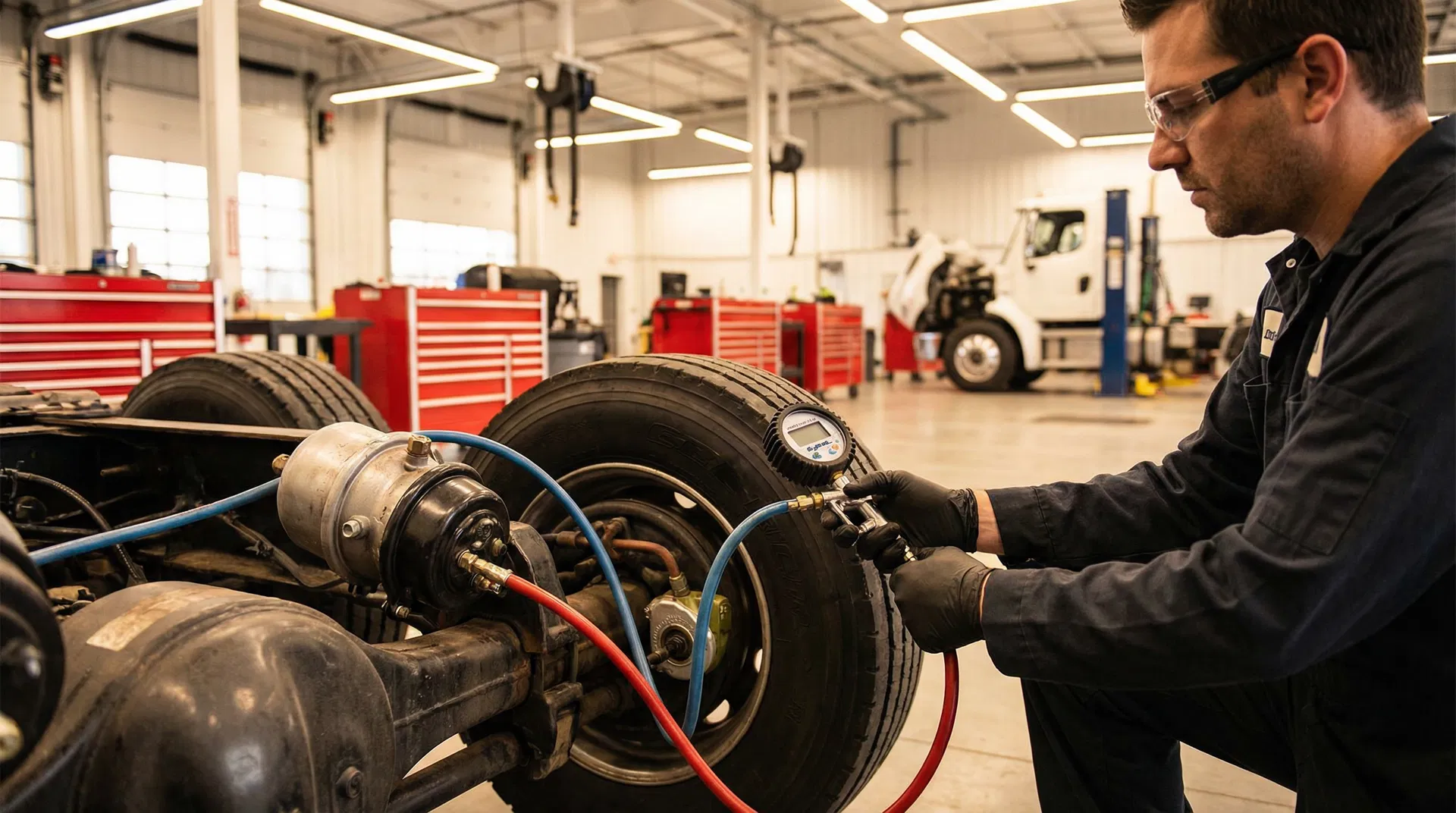
When a vehicle is placed out of service during a roadside inspection or fails an annual DOT inspection, it cannot legally operate until the violations are corrected. CTR provides immediate repair service for out-of-service vehicles, getting your trucks back on the road as quickly as possible.
Emergency brake repair and adjustment to bring vehicles into compliance
Lighting and electrical repairs — replace failed bulbs, repair wiring, fix connections
Tire replacement and wheel service for out-of-service tire violations
Air leak repair — air brake system, suspension air bags, coupling air lines
Frame crack repair and welding for structural violations
Exhaust system repair for leak violations
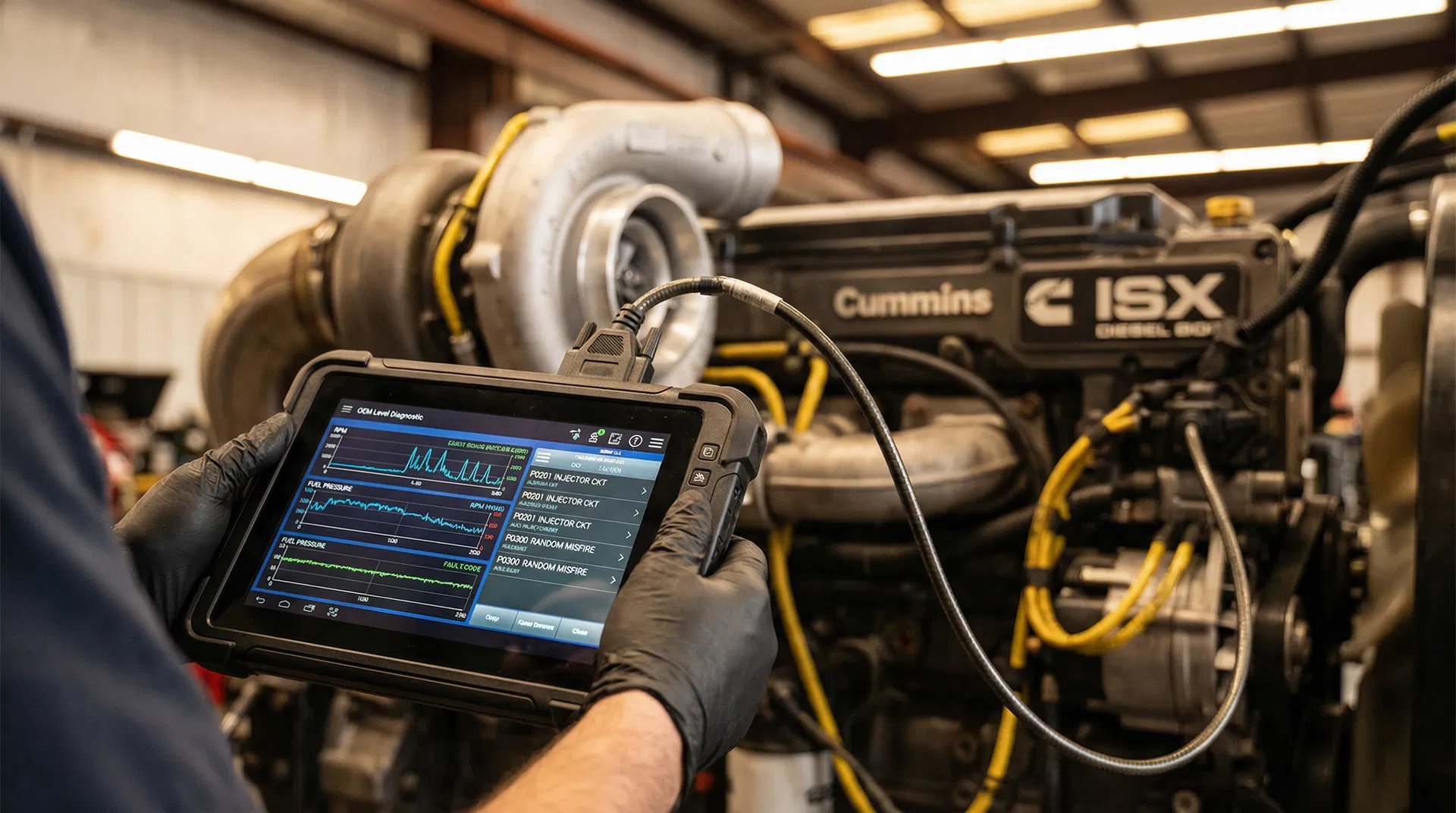
Brake violations are the #1 cause of out-of-service orders during DOT roadside inspections. FMCSA data consistently shows that approximately 30% of all out-of-service violations are brake-related. CTR performs thorough brake inspections and adjustments as part of every DOT inspection.
Pushrod stroke measurement — the most common brake violation (pushrod exceeds adjustment limit)
Brake lining and pad thickness measurement against FMCSA minimums
Air brake system pressure testing — governor cut-in/cut-out, low air warning, air loss rate
Automatic slack adjuster inspection and replacement when necessary
Brake drum and rotor measurement for wear limits
ABS (Anti-lock Braking System) indicator light verification
Lighting violations are the second most common DOT violation category. Every commercial vehicle must have all required lights operational, properly mounted, and visible from the required distances. CTR inspects and repairs all lighting and electrical systems to ensure full compliance.
Headlight aim and intensity verification
Tail light, brake light, and turn signal inspection and repair
Clearance and marker light inspection — all required positions
Reflector and retroreflective tape condition and placement verification
Wiring condition inspection — chafing, exposed conductors, improper splices
Battery and charging system verification for reliable electrical operation
Tire violations account for approximately 20% of all out-of-service orders. FMCSA has specific requirements for tread depth, tire condition, and wheel fastener integrity that differ from passenger vehicle standards. CTR inspects every tire and wheel assembly to FMCSA standards.
Tread depth measurement — steer axle minimum 4/32", drive/trailer minimum 2/32"
Sidewall condition — cuts, bulges, exposed cord, weathering
Tire inflation pressure check and adjustment
Wheel lug nut torque verification and re-torque
Hub seal and wheel bearing inspection
Mismatched tire size and type verification (steer axle requirements)
Frame and chassis integrity is critical for safe operation of heavy commercial vehicles. Cracked, bent, or corroded frame rails can lead to catastrophic failure. CTR inspects the entire frame assembly, cross members, and body mounting hardware during every DOT inspection.
Frame rail inspection for cracks, bends, and corrosion — visual and hands-on
Cross member and gusset inspection
Body and cab mounting hardware — loose, missing, or broken fasteners
Fifth wheel mounting and condition (tractor inspections)
Fuel tank mounting strap and bracket inspection
Mud flap and splash guard condition and mounting
Coupling devices connect the tractor to the trailer and must be in safe operating condition. Worn or damaged coupling components can cause trailer separation — one of the most dangerous possible failures on the road. CTR inspects all coupling devices as part of every DOT inspection.
Fifth wheel — locking mechanism, mounting bolts, pivot, wear, lubrication
King pin condition and wear measurement
Pintle hook and drawbar inspection (for pintle-style connections)
Safety chains and cables — condition, attachment, proper length
Air and electrical line connections — glad hands, pigtail condition, mounting
Slider mechanism inspection and operation (sliding fifth wheel and sliding tandem)
Exhaust system violations include leaks, improper routing near fuel systems or wiring, and damaged aftertreatment components. CTR inspects the entire exhaust system from the turbo outlet to the tailpipe, including all aftertreatment components on 2007+ vehicles.
Exhaust leak detection — manifold, turbo connections, flex joints, clamps
Exhaust system mounting and hanger inspection
Proximity to fuel lines, brake lines, and electrical wiring verification
DPF, DOC, and SCR condition inspection (2007+ vehicles)
Tailpipe discharge direction and location compliance
Aftertreatment system warning light verification
FMCSA Inspection Levels Explained
The Federal Motor Carrier Safety Administration defines five levels of inspection, each with a different scope. Understanding these levels helps fleet managers prepare for both annual facility inspections and roadside enforcement inspections.
Level I — North American Standard
The most comprehensive inspection. Includes examination of the driver's credentials, vehicle mechanical condition, and all documentation. This is the equivalent of the annual DOT inspection. Covers brakes, steering, suspension, frame, tires, lights, exhaust, coupling, and all other safety systems. Takes 45-90 minutes depending on vehicle condition.
This is the inspection level CTR performs for annual DOT compliance.
Level II — Walk-Around Driver/Vehicle
A less comprehensive inspection that includes everything in Level I except items that require the inspector to get under the vehicle. Commonly performed at roadside inspection stations. Covers all items visible from a walk-around: lights, tires, leaks, coupling, load securement, and driver credentials.
Level III — Driver-Only
Focuses exclusively on the driver — credentials, hours of service, medical certificate, seatbelt use, and substance abuse. No vehicle inspection is performed. Often conducted at weigh stations and inspection sites.
Level IV — Special Inspections
A one-time examination of a specific vehicle item. Typically conducted as a follow-up to verify that a previous violation has been corrected. Not a comprehensive inspection.
Level V — Vehicle-Only
A complete vehicle inspection performed without the driver present. Includes all mechanical items from Level I but no driver credential review. Often conducted at terminals and maintenance facilities.
Common Out-of-Service Violations
Understanding the most common DOT violations helps fleet managers prioritize preventive maintenance and avoid costly out-of-service orders. These are the violations CTR sees most frequently — and repairs most often.
Brake Adjustment (Pushrod Stroke)
Out-of-ServicePushrod stroke exceeds the adjustment limit for the brake chamber size. The most common single violation in DOT inspections. Automatic slack adjusters that are not maintaining proper adjustment must be replaced, not manually adjusted.
Brake Lining/Pad Thickness
Out-of-ServiceBrake lining worn below the minimum thickness (typically 1/4" for most applications). Cracked, contaminated, or missing brake lining also results in out-of-service.
Tire Tread Depth / Condition
Out-of-ServiceSteer tires below 4/32" tread depth, drive/trailer tires below 2/32". Exposed cord, sidewall damage, flat tires, and mismatched steer tires also result in out-of-service orders.
Lighting — Inoperative Required Lamps
Violation (OOS if multiple)Failed headlights, taillights, turn signals, brake lights, or marker lights. A single failed light is a violation; multiple failed lights or failed brake lights can result in out-of-service.
Air Brake System Leaks
Out-of-ServiceAir loss rate exceeding 3 PSI per minute (single vehicle) or 4 PSI per minute (combination vehicle) with engine off and brakes released. Audible air leaks at connections, chambers, or valves.
Steering Components
Out-of-ServiceExcessive steering wheel play, worn tie rod ends, loose drag links, leaking power steering, cracked steering gear mounting. Any condition that affects the driver's ability to steer safely.
Frame Cracks
Out-of-ServiceCracks in frame rails, particularly at stress points near spring hangers, cross members, and fifth wheel mounts. Any crack that extends more than 75% of the width of a frame rail member.
Fluid Leaks
Violation / OOSOil, coolant, fuel, or hydraulic fluid leaks that could contact the exhaust system, tires, or roadway. Fuel leaks are always out-of-service. Other fluid leaks depend on severity and location.
Prevention Is Cheaper Than Penalties: A single out-of-service violation can cost $1,000-$16,000 in fines, plus the cost of the repair, towing, and lost revenue while the truck sits. Regular preventive maintenance and pre-trip inspections catch most of these issues before they become violations. CTR offers fleet PM programs designed specifically to prevent DOT violations.
DOT Inspection Cost Reference
DOT inspection costs vary based on vehicle type and whether repairs are needed. These ranges represent typical costs. Fleet customers with 10+ vehicles receive volume pricing — contact us for a custom quote.
| Service | Typical Range |
|---|---|
| Annual DOT Inspection (pass/fail) | $75 – $150 |
| DOT Inspection + Brake Adjustment | $150 – $300 |
| Pre-Trip Inspection Documentation Setup | $50 – $100 |
| Out-of-Service Brake Repair (per axle) | $200 – $600 |
| Lighting Repair (per light) | $25 – $75 |
| Complete Lighting System Overhaul | $300 – $800 |
| Tire Replacement (per tire, mounted) | $300 – $600 |
| Air System Leak Repair | $100 – $400 |
| Frame Crack Repair (welding) | $200 – $800 |
| Fifth Wheel Rebuild / Replacement | $500 – $2,000 |
| Fleet DOT Inspection (10+ vehicles) | Call for volume pricing |
No Surprise Charges: The DOT inspection fee covers the complete inspection and documentation. If repairs are needed, we provide a detailed written estimate before starting any work. You approve the repair before we proceed. Re-inspection after CTR-performed repairs is included at no additional charge.
Serving the Charlotte Metro & I-85 Corridor
CTR Heavy Duty is located at 2931 Armentrout Drive in Concord, NC — directly off I-85 at Exit 58. Our central location makes us accessible from anywhere in the Charlotte metro area, with most locations within a 20-30 minute drive.
On-Site Inspections Available: For fleet customers with 15+ vehicles, CTR can arrange on-site DOT inspections at your terminal. Our certified inspectors bring all necessary equipment to your location, eliminating the need to drive vehicles to our shop. Contact us at (704) 786-0132 for on-site scheduling and pricing.
Frequently Asked Questions
Federal law (49 CFR 396.17) requires every commercial motor vehicle (CMV) operating in interstate commerce to pass an annual inspection. The inspection must be performed by a qualified inspector at a registered inspection facility. The inspection sticker is valid for 12 months from the date of inspection. Some states and carriers require more frequent inspections — check your state regulations and carrier requirements. North Carolina follows the federal annual requirement for CMVs.
If your vehicle fails the annual DOT inspection, it cannot legally operate on public roads until the deficiencies are corrected and the vehicle passes a re-inspection. At CTR, we perform the repair immediately in our full-service facility — you do not need to tow to a separate shop. Once repairs are completed, we re-inspect the affected systems and issue the inspection sticker. The re-inspection is included at no additional charge when CTR performs the repair.
A typical annual DOT inspection takes 45-90 minutes for a single vehicle in good condition. Combination vehicles (tractor-trailer) take longer than single units. If deficiencies are found that require repair, additional time is needed. For fleet customers scheduling multiple vehicles, we recommend allowing 1-2 hours per vehicle. We offer priority scheduling for fleets to minimize wait times.
Operating a CMV without a current annual inspection sticker is a federal violation that can result in: a fine of $1,000-$16,000 per violation (FMCSA civil penalties), the vehicle being placed out of service until inspected, negative impact on your carrier's CSA (Compliance, Safety, Accountability) score, and potential insurance implications. Repeat violations can result in increased fines and potential operating authority revocation. The cost of maintaining current inspections is far less than the penalties for non-compliance.
FMCSA defines five inspection levels. Level I (North American Standard) is the most comprehensive — it covers the driver and the complete vehicle, including under-vehicle inspection. This is equivalent to the annual DOT inspection. Level II is a walk-around inspection without getting under the vehicle. Level III is driver-only (credentials, hours of service). Level IV is a one-time check of a specific item. Level V is vehicle-only without driver review. Roadside inspections can be any level; annual facility inspections are Level I equivalent.
Yes. CTR offers fleet scheduling for DOT inspections with volume pricing. We work with your dispatch team to schedule inspections during planned downtime, minimizing disruption to your operations. For fleets of 10+ vehicles, we can dedicate inspection bays and technicians to process your fleet efficiently. Fleet customers also receive consolidated billing, digital inspection records, and renewal date tracking. Contact us at (704) 786-0132 to set up fleet inspection scheduling.
Yes. CTR performs annual DOT inspections on all trailer types: dry vans, flatbeds, reefers, tankers, lowboys, step decks, and specialty trailers. Trailer inspections cover brakes, tires, lights, frame, coupling devices (king pin), landing gear, and all other FMCSA-required items. Trailer inspections are typically faster than tractor inspections since there is no engine, steering, or driver compartment to inspect.
For the annual DOT inspection itself, you need the vehicle (obviously) and the vehicle registration. The inspector will also need to verify the VIN. For a complete Level I equivalent, the driver should have: CDL, medical certificate, hours of service records (ELD or paper logs), vehicle registration, and proof of insurance. Fleet customers should also have their maintenance records available, as inspectors may review maintenance history during FMCSA audits.
CSA (Compliance, Safety, Accountability) is FMCSA's safety measurement system that tracks carrier and driver safety performance. Every roadside inspection result — pass or fail — is recorded and affects your CSA score. Violations are weighted by severity and recency. High CSA scores trigger FMCSA interventions including warning letters, targeted inspections, and potential operating authority actions. Maintaining current annual inspections and addressing violations promptly helps keep your CSA scores low.
CTR can arrange on-site DOT inspections at your terminal for fleet customers with 15+ vehicles. On-site inspections require adequate space (level, paved surface with room to access all sides of the vehicle), and we bring our inspection equipment and certified inspectors to your location. This eliminates the need to drive vehicles to our shop and can be more efficient for large fleets. Contact us at (704) 786-0132 to discuss on-site inspection scheduling and pricing.
Stay DOT Compliant — Schedule Today
Do not wait for a roadside inspection to find out your truck is not compliant. Schedule your annual DOT inspection at CTR and drive with confidence knowing your fleet meets every federal safety standard.