DPF & Aftertreatment Repair — Charlotte, NC Area
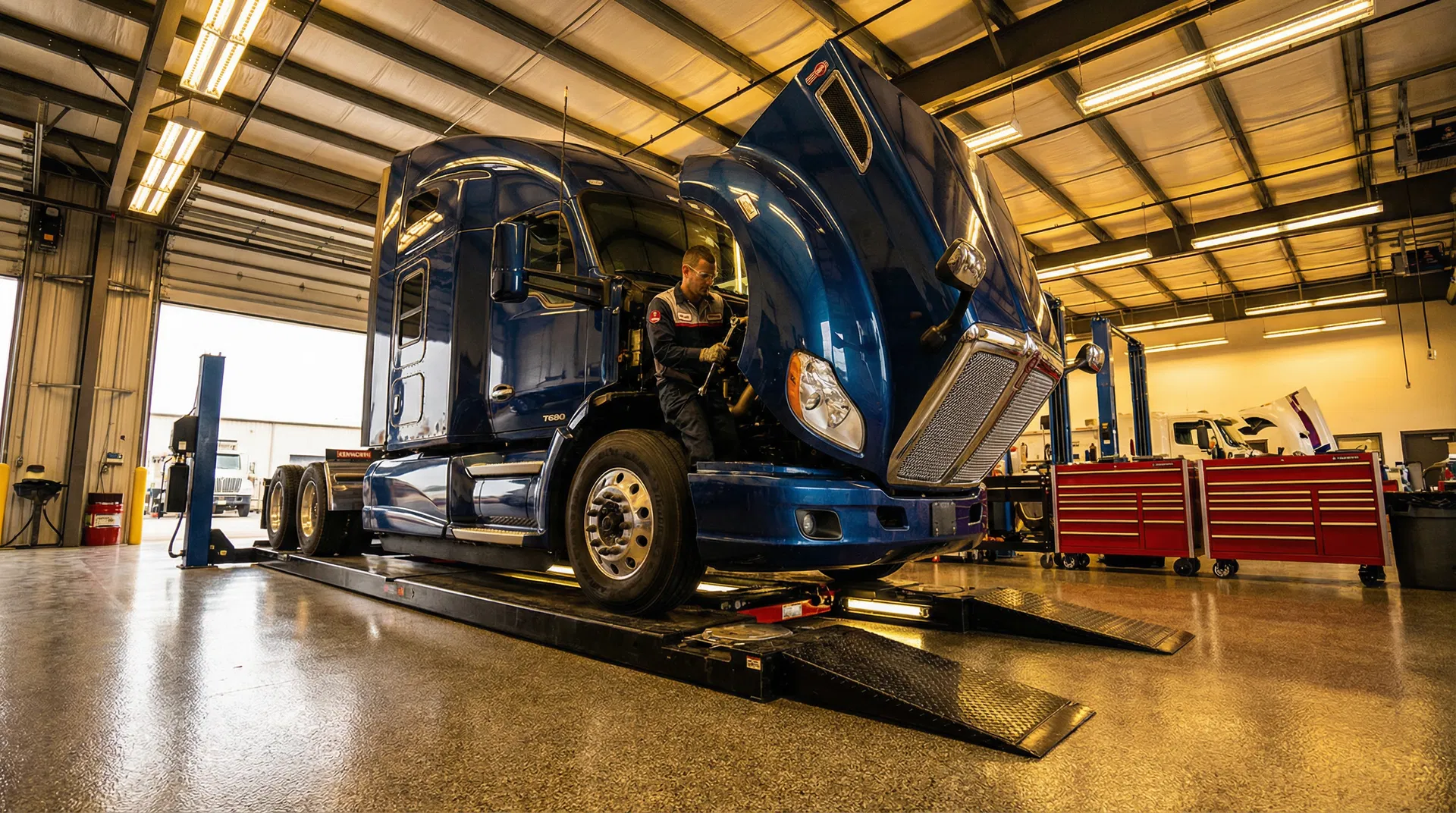
Your truck is in derate, the check engine light is on, the regen won't complete, or DEF codes are stacking up — and every hour that truck sits is money walking out the door. CTR Repair is a full-service heavy-duty aftertreatment shop serving the Charlotte metro area from our facility in Concord, just up I-85. We diagnose and repair the entire exhaust aftertreatment system on Cummins, Detroit Diesel, PACCAR, Volvo/Mack, and International trucks: DPF removal and reinstallation, DOC and SCR service, DEF dosing repair, NOx and temperature sensor replacement, forced regens, and derate recovery. Filter cleaning is coordinated through a trusted cleaning partner; every other aftertreatment repair is done in our shop at 2931 Armentrout Dr, Concord NC — a short run from Charlotte, University City, Steele Creek, and the I-77 / I-85 freight corridor.
Why Charlotte Fleets Trust CTR for Aftertreatment
Aftertreatment repair requires OEM-level diagnostics, systematic troubleshooting, and techs who work on these systems every day. CTR provides all three from our Concord shop at 2931 Armentrout Dr — about 20 minutes up I-85 from uptown Charlotte.
Heavy-Duty Diesel Specialists
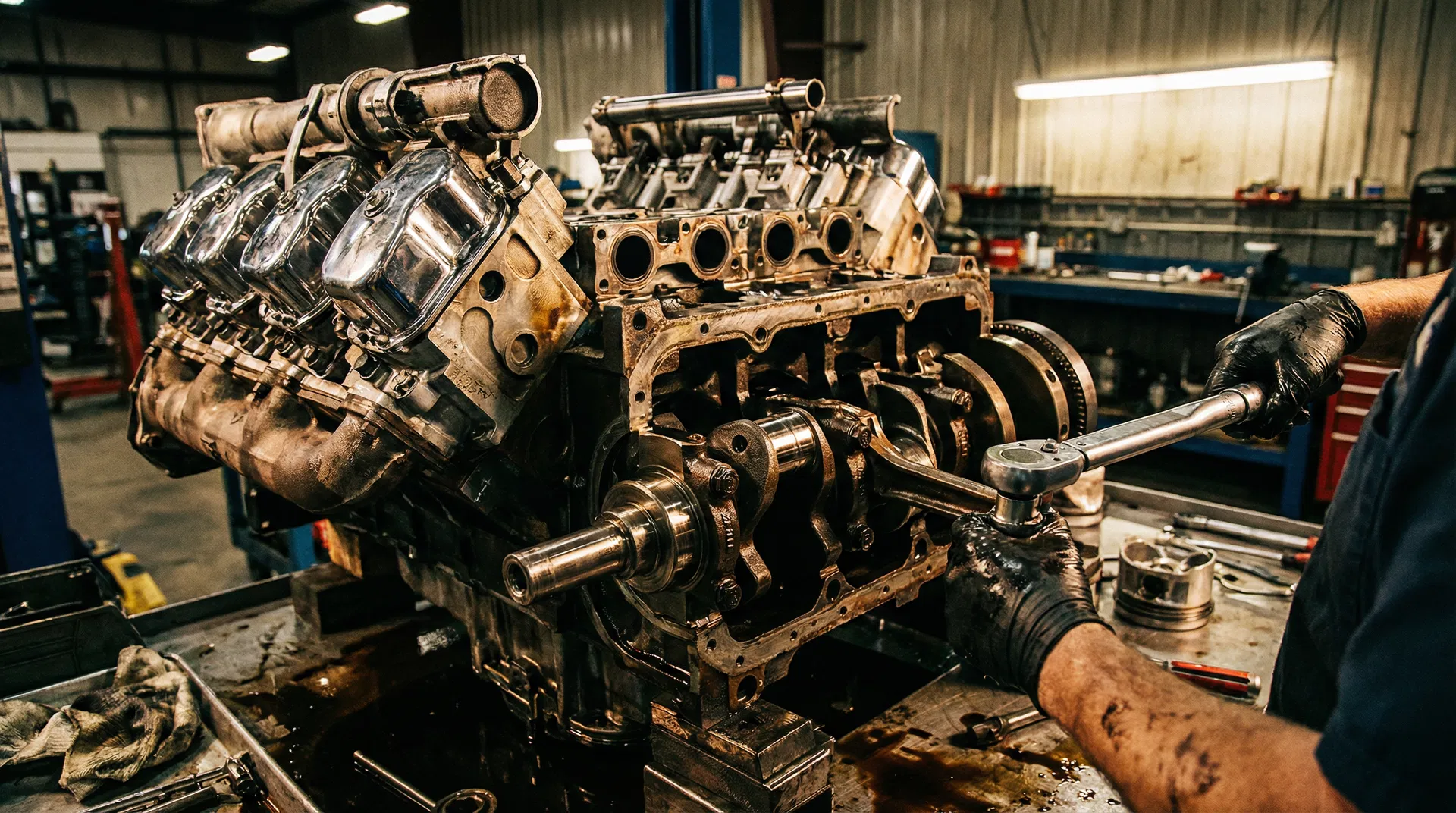
We are not a light-duty shop that occasionally works on trucks. Our techs work on Class 6-8 aftertreatment every day. We know the common failure patterns by engine family and we stock the sensors and parts that fail most.
OEM-Level Diagnostics
Cummins Insite, Detroit Diesel Diagnostic Link, PACCAR Davie, Volvo Tech Tool, Navistar ServiceMaxx — real scan tools, not generic code readers. Without real tools, aftertreatment diagnostics turn into parts cannons and wasted money.
In-House DPF R&R, Outsourced Cleaning
We remove, reinstall, and replace DPF filters ourselves. When a filter needs thermal or ultrasonic cleaning beyond what a forced regen can accomplish, we coordinate with a specialist cleaning partner — you don't have to shop that part yourself, we handle logistics and turnaround.
Honest Diagnostics
Aftertreatment problems can chain — a bad NOx sensor can mask a bad SCR catalyst, which can mask a worn-out DPF. We diagnose systematically, repair the actual root cause, and tell you straight what's failed and what's still serviceable. No parts cannons, no upsells on components that still test good.
CARB/EPA Compliant Repairs
All repairs restore the aftertreatment system to factory operation. We do not perform emissions deletes.
Easy Reach from the Charlotte Metro
We're at 2931 Armentrout Dr in Concord — about 20 minutes up I-85 from uptown Charlotte, easy from University City, Northlake, Harrisburg, Mint Hill, and the I-77 / I-85 interchange. Charlotte-based fleets, owner-operators, and freight customers running through CLT and the Norfolk Southern intermodal terminal regularly route their aftertreatment work to our shop because we turn trucks faster than the dealer network and we don't sit on parts.
Aftertreatment Problems We Fix
From derate recovery to full DPF replacement, CTR diagnoses and repairs the entire exhaust aftertreatment system. Every service begins with OEM-level diagnostics to identify the root cause — not a parts cannon.
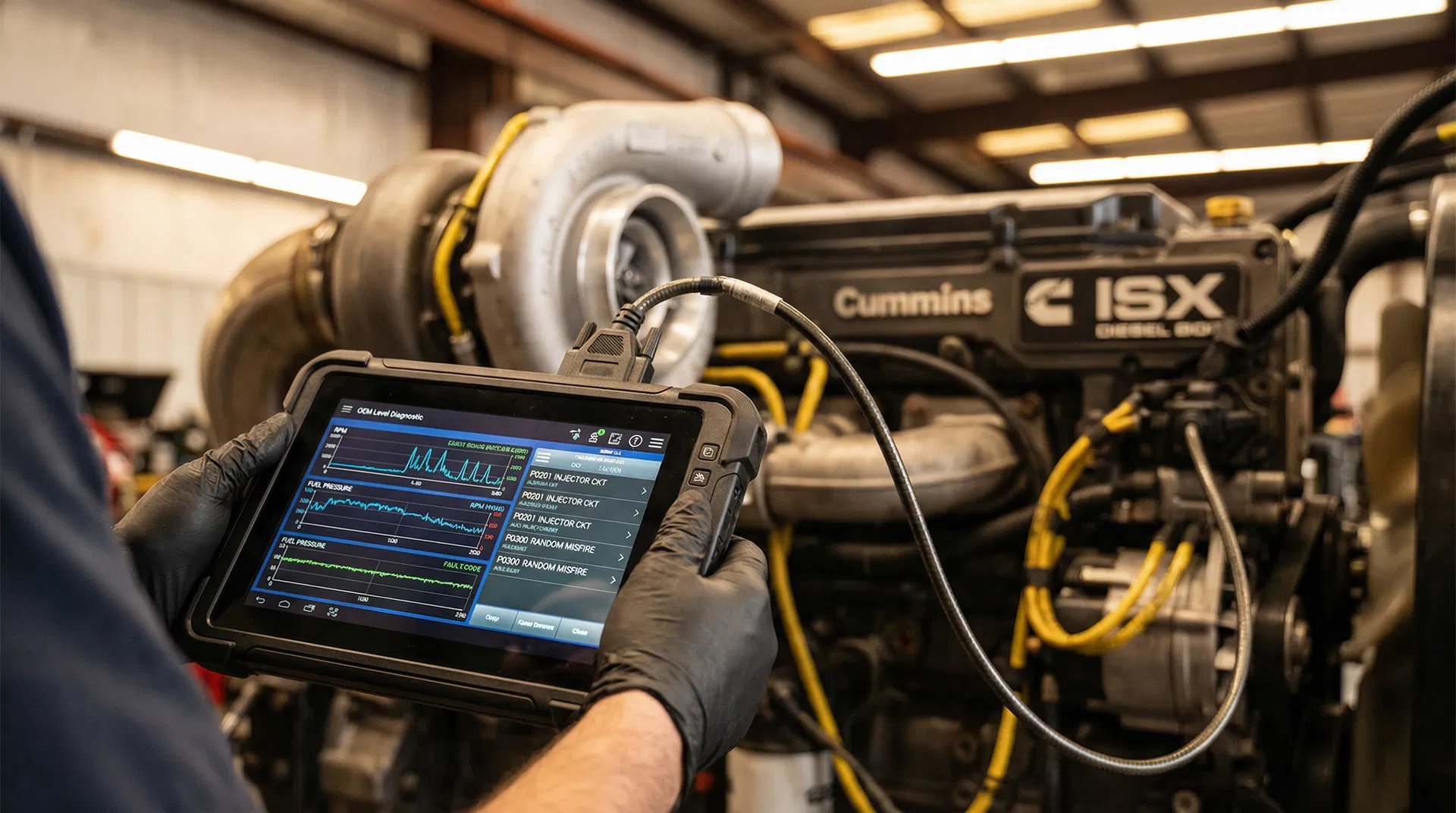
5 MPH limp-home mode, 55 MPH derate, SPN 3719 FMI 0, SPN 3251 FMI 16, SPN 3361 FMI 5 — if the ECM has put your truck into a reduced-power state, we find the root cause and clear it. Most derates trace back to DPF soot overload, failed regens, bad NOx sensors, DEF quality issues, or clogged SCR. We diagnose with OEM-level scan tools and repair the actual problem rather than just clearing codes until the next event.
Full fault code analysis with OEM scan tools to identify root cause
Live data review — soot loading, NOx conversion, DEF dosing rates, EGT readings
Systematic diagnosis to separate primary failure from cascading codes
Repair of root cause component, not just code clearing
Post-repair verification including forced regen and road test confirmation
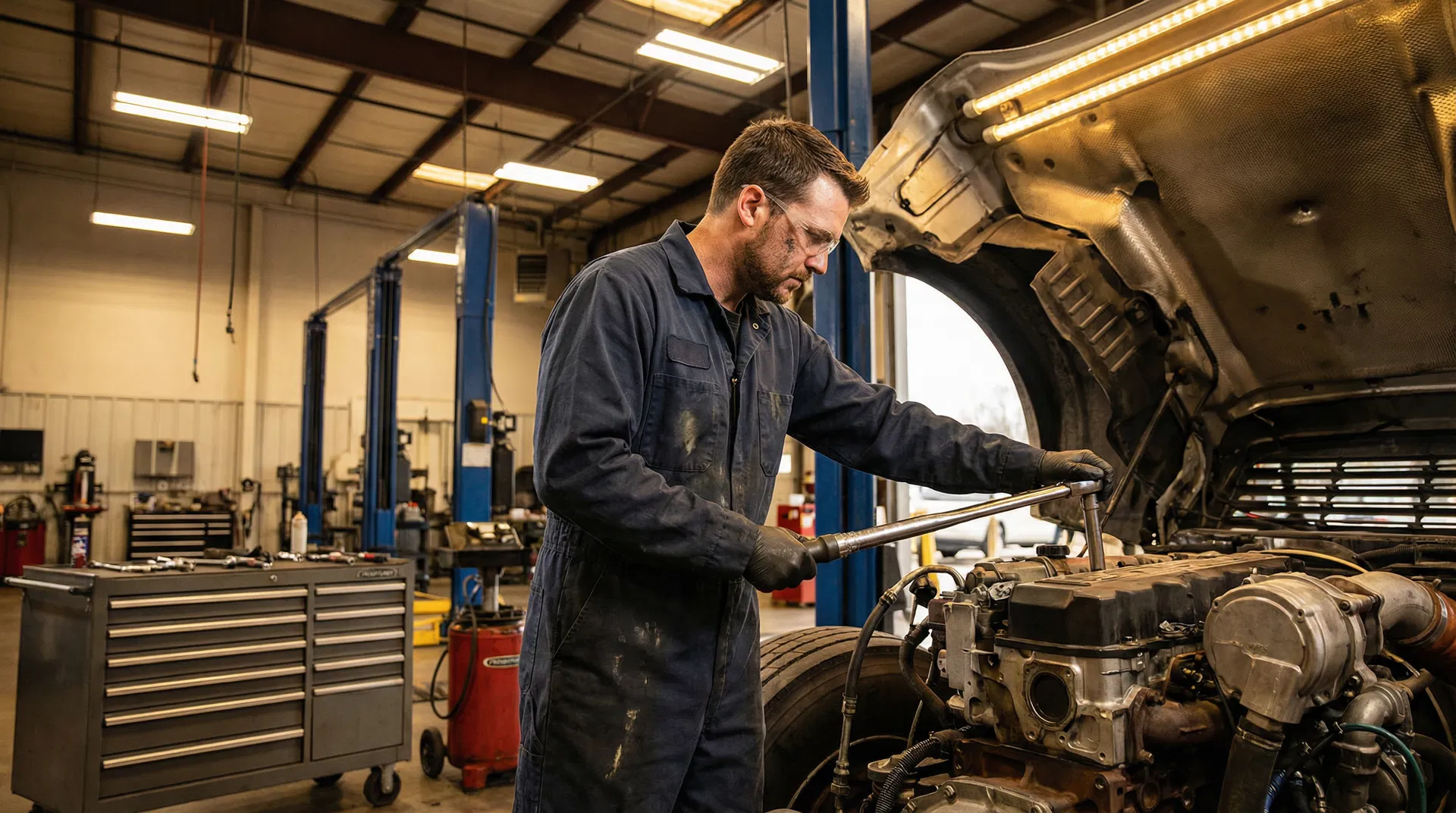
The truck won't regen at all, regens don't complete, or soot loading keeps climbing. We perform forced parked regens, diagnose why the regen is failing (DOC not reaching light-off temperature, bad EGT sensors, fuel dosing problems, DPF past service life), and repair the underlying cause.
Forced parked regeneration with real-time exhaust temperature monitoring
DOC light-off temperature verification — failed DOC prevents regen success
EGT sensor testing at all positions (inlet, mid-bed, outlet)
Fuel dosing system inspection — 7th injector or dosing valve failure
DPF soot loading assessment — determine if filter is recoverable or needs R&R
P20EE, P2BA9, P249D, P226C, P244A, P207F, SPN 4364, SPN 4363, SPN 3226, SPN 3216 — aftertreatment codes are specific and almost always point to a single failed component. We diagnose on the truck, confirm the fault with live data, and replace only what's actually bad.
Complete active and inactive fault code retrieval with OEM software
Live data confirmation — verify the code matches actual sensor behavior
Freeze frame analysis to determine conditions at time of fault
Component-level testing before replacement to avoid parts cannon approach
Code clearing and verification drive cycle to confirm repair
Bad NOx sensors are one of the most common aftertreatment failures. We stock common Cummins, Detroit, PACCAR, and Volvo NOx sensors and replace them on a first-visit basis when we can. OE and quality aftermarket options available.
Inlet and outlet NOx sensor testing with OEM diagnostics
Common sensors stocked for Cummins, Detroit, PACCAR, and Volvo platforms
OE and quality aftermarket replacement options
Post-replacement calibration and learn procedures as required by ECM
First-visit replacement when sensor is in stock
Exhaust gas temperature sensors (inlet, mid-bed, outlet) and DPF delta-pressure sensors all fail over time. We test, replace, and recalibrate as required by the ECM.
EGT sensor testing at all aftertreatment positions
Delta-pressure sensor accuracy verification against known-good values
Sensor replacement with OE or quality aftermarket parts
ECM recalibration and learn procedures after replacement
Back-pressure verification to confirm proper DPF flow post-repair
DEF dosing valve replacement, DEF pump repair, DEF quality sensor replacement, DEF line heater diagnostics, frozen DEF line repair, DEF tank header service, and DEF quality testing. Bad DEF — or a bad dosing system — will take a truck out of service fast.
DEF dosing valve testing and replacement
DEF pump and supply module diagnosis and repair
DEF quality sensor replacement and calibration
DEF line heater diagnostics for cold-weather failures
DEF fluid quality testing — verify 32.5% urea concentration
DEF tank header and level sensor service
Failed SCR conversion efficiency, contaminated catalyst, cracked substrate. We test, diagnose, and replace SCR catalysts to OEM spec.
SCR efficiency testing using OEM diagnostics — NOx conversion rate measurement
Contamination assessment (DEF crystallization, oil, coolant intrusion)
SCR catalyst replacement with OEM or premium aftermarket units
Post-replacement NOx sensor calibration and verification
Ammonia slip catalyst inspection
Failed DOC face, hydrocarbon bleed-through, low light-off temperature. We replace DOCs and verify post-repair performance.
DOC efficiency testing — light-off temperature verification
Hydrocarbon bleed-through assessment
DOC replacement with OEM or quality aftermarket catalysts
Post-replacement forced regen to verify system operation
Exhaust temperature sensor verification at DOC inlet and outlet
We remove DPFs in-house. When a filter is loaded beyond what a forced regen can recover, we pull it, send it to our cleaning partner for thermal/ultrasonic cleaning, and reinstall it once cleaned. When the filter is past service life or damaged (cracked substrate, melted, leaking), we replace it with new or remanufactured OE or quality aftermarket.
In-house DPF removal and reinstallation — no subcontracting the R&R
Outsourced thermal/ultrasonic cleaning through trusted cleaning partner
New and remanufactured DPF replacement for damaged or end-of-life filters
Complete gasket, clamp, and sensor connection replacement during R&R
Post-installation forced regen and back-pressure verification
Old filter core return handling for manufacturer credit where available
Burned connectors, chafed harnesses, corrosion — aftertreatment wiring is a common failure point from under-chassis heat. We repair harnesses properly, not with butt-splices.
Connector inspection for heat damage, corrosion, and moisture intrusion
Harness chafe repair with proper heat-shrink and loom protection
Pin-to-pin continuity and resistance testing
Proper solder and heat-shrink repairs — no butt-splices
Routing correction to prevent future heat or abrasion damage
Makes & Engines We Work On
Cummins
ISX15, ISX12, X15, X12, ISB6.7, ISL9, ISC8.3, L9, B6.7
Detroit Diesel
DD13, DD15, DD16, Series 60
PACCAR
MX-13, MX-11, PX-9, PX-7 (Kenworth, Peterbilt)
Volvo / Mack
D11, D13, D16, MP7, MP8, MP10
International / Navistar
MaxxForce, N9, N10, N13, A26
Ford
6.7L Power Stroke, 6.4L Power Stroke (Class 6-7 chassis)
What to Expect
Get the truck in
Call (704) 786-0132 or roll in. For emergency derate situations, tell us on the phone and we'll work you in as fast as possible.
Diagnostic evaluation
We pull active and inactive fault codes, run live data, perform any required active tests, and identify the root cause.
Written estimate
Before we replace parts, you get an estimate with labor hours and parts cost.
Repair
We perform the repair with OE or OE-quality parts.
Verification
We clear codes, command any required learns/calibrations, and verify the system operates correctly with a post-repair drive cycle. Where appropriate, we perform a parked regen to confirm the system is back to healthy operation.
Out the door
Truck is released with repair documentation you can keep in your maintenance file.
Aftertreatment Repair Cost Reference
Aftertreatment repair cost varies widely depending on which component failed. Typical ranges for Class 6-8 trucks. All estimates provided in writing before work proceeds.
| Service | Typical Range |
|---|---|
| NOx Sensor Replacement | $400 – $900 per sensor |
| EGT / Delta-Pressure Sensor | $300 – $700 |
| DEF Dosing Valve | $500 – $1,100 |
| DEF Pump | $900 – $1,800 |
| DPF R&R with Outside Cleaning | $800 – $1,600 |
| DPF Replacement (New or Reman) | $1,800 – $4,500+ |
| SCR Catalyst Replacement | $2,500 – $5,000+ |
| DOC Replacement | $1,500 – $3,500 |
| Forced Regen with Diagnostics | $250 – $500 |
| Full Aftertreatment Diagnostic | $200 – $400 |
Repair vs. Replacement: Many aftertreatment issues are sensor or component failures that cost $300-$1,800 to repair. Catching a bad NOx sensor early prevents the cascade into SCR damage and eventual DPF failure that can cost $5,000+. CTR always diagnoses the root cause first and repairs only what's actually failed.
Serving Charlotte Metro & the I-85 / I-77 Corridor
We work on heavy-duty trucks based in or running through the entire Charlotte metro region. Most Charlotte-area fleets find that running a truck up to Concord is faster than waiting at a dealer service department in town. Call ahead and we'll have a bay ready.
Frequently Asked Questions
Call (704) 786-0132 immediately. We prioritize in-derate trucks and work them in as quickly as possible during business hours.
We don't thermal or ultrasonically clean filters in our shop. We remove the filter, send it to our cleaning partner, and reinstall it when cleaned. Every other aftertreatment repair — DPF removal/replacement, DOC, SCR, DEF, sensors, wiring, diagnostics — is done at our shop in Concord.
Typically one business day for R&R with outside cleaning, or same-day to next-day for a full filter replacement depending on parts availability.
No. We only perform CARB/EPA-compliant repairs that restore the aftertreatment system to factory operation.
Maybe, maybe not. Some aftertreatment codes escalate quickly into a derate. Come get it scanned — we'll tell you whether you can keep running or need to repair first.
Yes. Failed regens trace back to a specific root cause — bad sensors, low DOC temperature, fuel dosing issues, DPF past service life, or EGR problems. We diagnose systematically and repair the cause.
Yes. Cummins, Detroit, PACCAR, Volvo/Mack, International, and Ford 6.7L/6.4L Power Stroke in Class 6-7 chassis.
Quality aftermarket sensors from recognized manufacturers often perform identically to OE at lower cost. We use both depending on application and what the customer prefers.
About 20-25 minutes up I-85 to Exit 58 in good traffic. We're closer to most north-side Charlotte fleets than the downtown dealer service departments.
Stop Losing Money to Aftertreatment Downtime
Every day a truck sits in derate mode costs your fleet revenue. CTR diagnoses the root cause, repairs the actual failed component, and gets your trucks back on the road. Call now or drive in — about 20 minutes from uptown Charlotte.